Geothermal May Become the Oil & Gas Industry’s Second Career
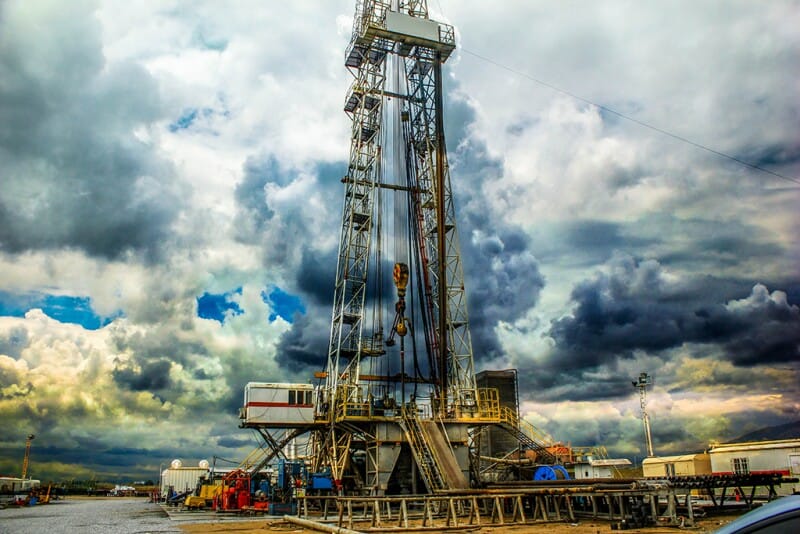
The North Sea is often described as a declining resource basin.
But that perspective ignores the most valuable asset built there over the past fifty years.
It isn’t the oil.
It’s the capability to engineer the subsurface at extreme depths.
From Aberdeen to Stavanger to Hamburg, the North Sea created one of the most sophisticated subsurface engineering clusters in the world.
And that capability may soon find a new mission.
The Unexpected Workforce
Across Northern Europe, thousands of engineers and drilling specialists have spent their careers operating several kilometers beneath the Earth's surface.
Drilling superintendents.
Reservoir engineers.
Well integrity specialists.
Directional drilling experts.
For decades their task was clear:
Find and produce hydrocarbons.
But the expertise developed in the North Sea was never just about oil.
It was about understanding and managing complex subsurface systems.
And that capability does not disappear simply because the objective changes.
The Skill Overlap
Many of the technical capabilities required for geothermal development already exist within the oil and gas sector.
Deep drilling.
Reservoir modeling.
Well integrity management.
Pressure control and Managed Pressure Drilling (MPD).
Directional drilling through complex geological formations.
These are not new competencies.
They are the daily operating environment of the offshore industry.
Service companies such as SLB, Baker Hughes, and Halliburton have spent decades developing tools to map, drill, and monitor subsurface reservoirs.
In geothermal projects, the objective changes.
But much of the engineering toolkit remains the same.
Instead of extracting hydrocarbons, the system is designed to circulate fluids and extract heat.
Drilling for Heat Is Not the Same as Drilling for Oil
The transition, however, is not trivial.
Oil and gas wells are typically drilled into sedimentary formations such as sandstone or carbonate reservoirs.
Deep geothermal systems often target crystalline formations such as granite.
These rocks are harder.
Temperatures are higher.
Reservoir behavior is different.
Many geothermal systems operate at temperatures exceeding 200°C, a threshold where conventional downhole electronics begin to fail.
Drill bits experience higher wear.
Materials must withstand intense thermal cycling.
In other words, geothermal development does not simply reuse oil and gas technology.
It pushes it further.
The transition isn’t just about changing what we drill for.
It’s about mastering the heat we used to avoid.
The North Sea Industrial Cluster
The North Sea basin produced one of the most advanced subsurface engineering ecosystems in the world.
Decades of offshore exploration created dense networks of service companies, engineering firms, drilling contractors, and equipment manufacturers.
Cities such as Aberdeen, Stavanger, and Hamburg became hubs of subsurface expertise.
Thousands of wells were drilled.
Reservoir data accumulated over decades.
Entire generations of engineers were trained in deep subsurface operations.
That institutional knowledge cannot easily be recreated elsewhere.
It represents a strategic industrial asset.
From Exploration to Infrastructure
There is, however, a shift involved.
Oil and gas exploration is often a discovery business.
High risk.
High reward.
Occasional breakthroughs.
Geothermal projects operate under a different economic model.
They resemble infrastructure assets.
Lower margins.
Longer lifetimes.
Predictable output over decades.
The engineering challenge remains subsurface management.
But the financial logic shifts from discovery windfalls to long-term infrastructure yield.
For engineers accustomed to working at the geological frontier, the mission changes.
But the skills remain deeply familiar.
A Workforce Transition
The energy transition is often framed as a technological transformation.
But in many ways it may also be a workforce transition.
The engineers who built offshore oil infrastructure did not just develop extraction techniques.
They developed the ability to design, drill, and manage complex subsurface systems.
Those capabilities are increasingly required for a new generation of energy infrastructure:
Geothermal reservoirs.
Carbon storage sites.
Underground hydrogen systems.
We don’t need a new workforce.
We need a new mission for the one we already have.
The Strategic Question
Europe’s future energy system will increasingly rely on what lies beneath the surface.
Heat.
Carbon storage.
Hydrogen buffering.
All of these require subsurface engineering at scale.
The workforce capable of delivering that capability already exists.
The North Sea is not reaching the end of its industrial life.
It may be entering its second act.
Discussion
For those working in drilling, reservoir engineering, geothermal, or offshore energy:
Do you see geothermal and other subsurface energy systems becoming a meaningful second chapter for the oil and gas workforce?
Comments ()