The Energy Transition Might Be a Drilling Problem
Much of the public conversation around the energy transition focuses on speed.
Wind farms are being built at record pace.
Solar capacity continues to expand across Europe.
Transmission networks are being upgraded to carry increasing volumes of renewable electricity.
From the surface, the transition appears to be accelerating rapidly.
But beneath the surface, the timeline looks very different.
Because some of the infrastructure required for a low-carbon energy system moves at industrial speed, not political speed.
And that difference may become one of the defining constraints of the transition.
The Illusion of Speed
Renewable technologies such as wind and solar scale quickly because they are modular.
A wind turbine can be installed in months.
A solar farm can be expanded panel by panel.
This modularity creates the impression that the energy transition is primarily a matter of deployment rates.
But not every component of the energy system works this way.
Some of the most critical elements of the future energy system are not built on the surface at all.
They are built underground.
And underground infrastructure operates according to a very different timetable.
Unlike a solar panel, where the output is predictable once installed, every meter drilled into the Earth carries geological uncertainty.
Subsurface infrastructure is therefore not simply deployed.
It is explored, engineered, and managed over decades.
The Subsurface Demand Explosion
Several key technologies emerging in Europe’s energy transition rely on deep subsurface engineering.
Geothermal energy requires production wells capable of reaching hot reservoirs several kilometers below the surface.
Carbon capture and storage (CCS) requires injection wells designed to safely store captured CO₂ in geological formations for decades.
Hydrogen storage often relies on underground caverns or depleted reservoirs to balance renewable electricity systems across seasons.
Different technologies.
But all three rely on the same industrial capabilities:
- deep drilling
- reservoir modeling
- well integrity management
- long-term subsurface monitoring
In other words, geothermal energy, CCS, and hydrogen storage are not just energy technologies.
They are drilling technologies.
The Rig Constraint
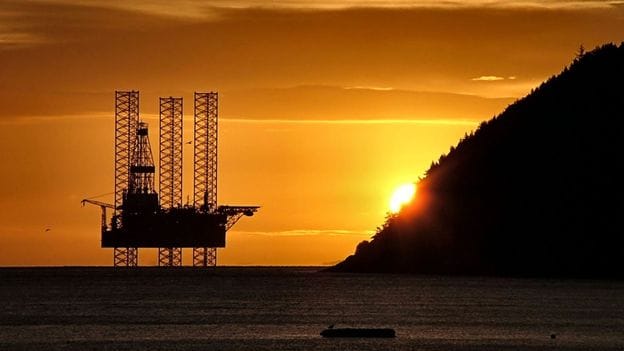
For decades, Europe maintained substantial drilling capacity through oil and gas exploration.
The offshore industry in the North Sea supported fleets of drilling rigs, specialized service companies, and highly trained subsurface professionals - including drilling superintendents, reservoir engineers, and well integrity specialists.
But over the past decade, that capacity has gradually declined.
Rigs were retired.
Exploration budgets contracted.
Specialized crews moved into other industries.
The result is that Europe’s drilling capability today is significantly smaller than it was during the peak years of offshore exploration.
Which creates a structural mismatch.
Because many of the technologies required for the energy transition depend on the same drilling capabilities.
We are planning a 2030 energy system with a 1990s drilling fleet.
And while drilling rigs are technically mobile, importing additional capacity is not always straightforward.
North Sea operations operate under strict regulatory frameworks and environmental standards, and deep geothermal drilling often requires equipment capable of operating in high-temperature, hard-rock environments.
Not every rig is fit for that purpose.
The Lead-Time Reality
Drilling capacity cannot be expanded overnight.
Bringing new rigs into operation, refurbishing existing fleets, and training specialized crews typically requires 24 to 36 months.
In other words, even if policymakers decided tomorrow to accelerate geothermal, CCS, and hydrogen storage simultaneously, the drilling capacity required to support those projects would lag years behind the ambition.
Rigs must be reactivated.
Crews must be upskilled.
Supply chains for high-temperature alloys and specialized drilling equipment must be rebuilt.
These are not software updates.
They are physical deployments.
The Strategic Implication
This creates an uncomfortable reality.
The pace of the energy transition is often framed as a question of political will or financial investment.
But in many cases the limiting factor may be far more practical.
Operational depth.
If geothermal deployment accelerates, CCS projects expand, and hydrogen storage becomes a central component of Europe’s energy system, all three sectors will compete for the same scarce resources:
- drilling rigs
- reservoir engineers
- well construction teams
- subsurface modeling expertise
The energy transition therefore faces a constraint that receives surprisingly little attention.
It is not only an energy problem.
It is an industrial capacity problem.
Discussion
For professionals working in geothermal, drilling, subsurface engineering, or offshore energy:
Where do you see the real constraints emerging?
Is drilling capacity likely to become a structural bottleneck as subsurface energy systems scale?
Comments ()